‘What role should AI play in home-based rehabilitation, and what are the limitations?’
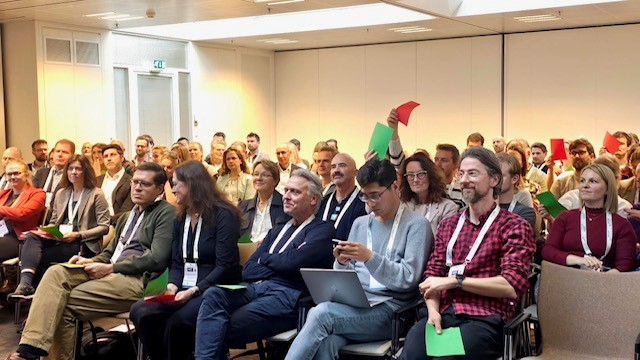
The Dutch Congress of Rehabilitation Medicine (DCRM) on 12 November in ’s-Hertogenbosch was the ideal venue to discuss this question with 89 rehabilitation doctors, therapists and researchers.
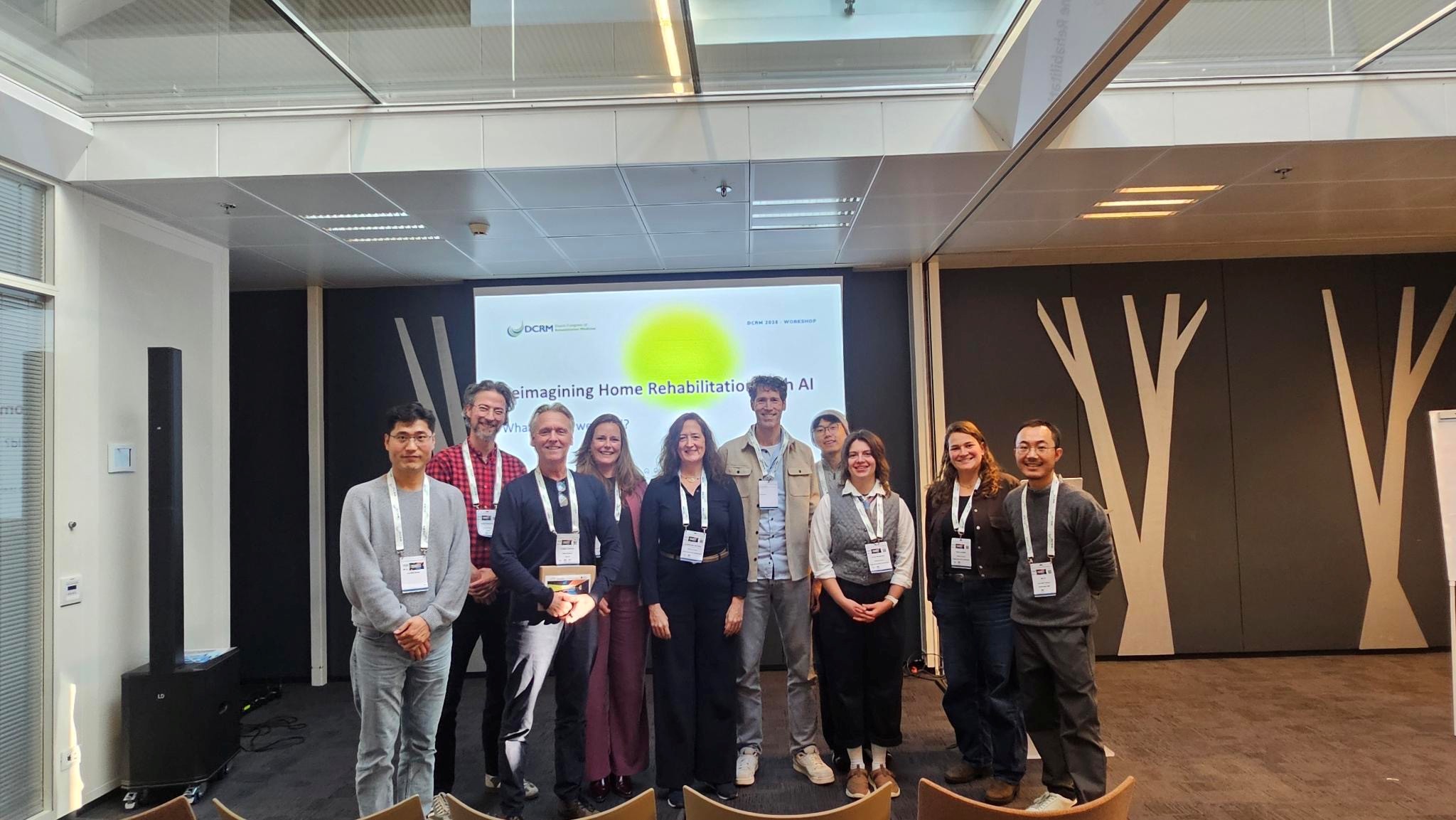
Bin Yu, associate lecturer in the Digital Life research group at Amsterdam University of Applied Sciences, led the workshop ‘Redesigning home-based rehabilitation with AI: what do we need to develop?’ that afternoon. The session brought together recent developments from three RehabAI@Home projects: RehabTwin, TrAIn@home and OPRAH2.0. All these projects have been funded by Health Holland.
Smart, AI-powered home exercise and rehabilitation system
Bin Yu presented the ‘RehabTwin’ research project, which focuses on the development of an AI-driven digital twin for home-based rehabilitation following a stroke. In collaboration with Prof. Thomas Janssen (VU Amsterdam), Dr Huawei (Max) Wang of OuterMotion, Dr Frank Berenpas (Reade) and Prof. Somaya Ben Allouch (lecturer at Digital Life, Amsterdam University of Applied Sciences), a digital twin for home-based rehabilitation is being developed.
On the one hand, research is being carried out to investigate how this can not only improve the accuracy of exercises carried out independently, but also enhance adherence to treatment and engagement throughout the long-term rehabilitation process.
How does it work?
RehabTwin combines a sensor worn on the shoe with AI-powered motion analysis and a conversation-based coach, enabling patients to receive support during therapy sessions from home. This gives therapists a clearer picture of their patients’ progress.
Co-creation
During the co-design session on 12 November, rehabilitation professionals shared valuable insights based on the following key questions:
- Which AI features are actually needed for home-based rehabilitation?
- What form should these take in patients’ everyday lives?
- And which concerns and safeguards should take precedence?
The insights gained will guide the design and development over the next two years, as well as the future AI being developed for home-based rehabilitation.