



EQUITY
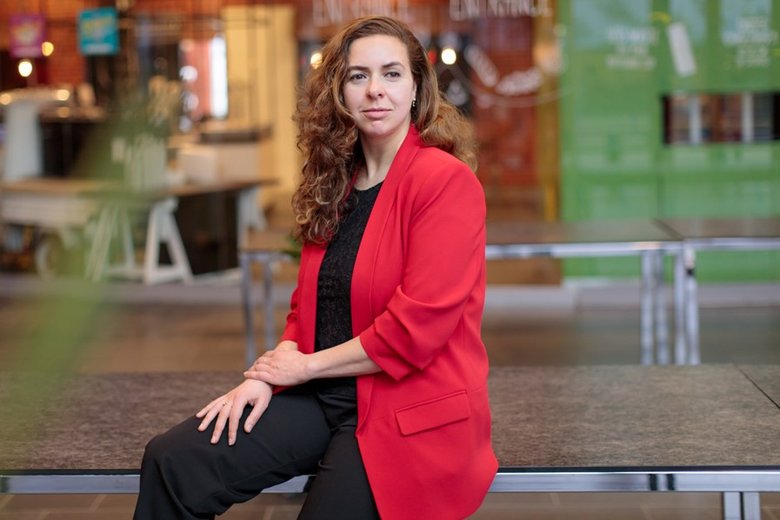
Somaya Ben Allouch, senior lecturer at the Amsterdam University of Applied Sciences (AUAS) and professor by special appointment at the University of Amsterdam (UvA), and a member of the Digital Interactions Lab (DIL) at the Institute of Computer Science, has received an NWO-KIC grant for the EQUITY consortium in her capacity at the UvA. The EQUITY consortium was largely established through the ELSA Lab’s ‘AI for Health Equity’ initiative.
The Lab will develop inclusive, AI-supported tools for the prevention and detection of cardiovascular disease, with a particular focus on people for whom existing digital healthcare is often less accessible.
Equal treatment for everyone
People with a lower socio-economic status are at greater risk of cardiovascular disease, but are often harder to reach with preventive care and digital health tools. Many existing technologies do not take sufficient account of people’s everyday circumstances, needs and preferences. As a result, innovations intended to improve health may inadvertently exacerbate existing inequalities.
The EQUITY project, which stands for ‘Enhancing Quality, Understanding, and Inclusion in Healthcare through socio-Technical AI sYstems’, aims to bring about change in this area. Led by Ben Allouch, the consortium will work closely with residents, healthcare professionals, civil society organisations, local authorities, employers, trade unions, hospitals and health insurers to develop and test inclusive AI as part of an integrated programme for prevention, early detection and aftercare.
AI tools developed in collaboration with the community
The project centres on developing technology in co-creation with residents in their own neighbourhoods and with employees in their everyday working environments, in collaboration with the people and organisations that will use it. The consortium will investigate three AI-supported solutions:
- an accessible health check-up in the community;
- simple monitoring tools for use at home;
- and a conversation-based AI tool designed to help people find the right support.
Together, these tools are designed to make preventive cardiovascular care more accessible, build trust and provide long-term support. The programme will be embedded in local communities, workplaces and home environments.
Collaboration between science and society
Health inequalities cannot be resolved through technology alone. EQUITY therefore combines expertise from various disciplines with close collaboration between academic and civil society partners. The consortium comprises the University of Amsterdam, Utrecht University, VU University Amsterdam, Amsterdam University of Applied Sciences, Amsterdam UMC and Eindhoven University of Technology, alongside a broad network of partners from the public and private sectors and the community.
The grant was awarded through the NWO-KIC call for proposals ‘Reducing health inequalities – Technology for people of lower socio-economic status’. Under this call, NWO awarded grants to two projects, with a combined budget of 7 million euros.
This message comes from the website of the UvA.